Most visitors to San Francisco do not need a car. The city’s Muni trams, buses, and cable cars connect Union Square, Fishermans Wharf, and the Ferry Building. Parking costs, traffic, and steep hills make driving more trouble than it saves. free walking tour san francisco recommends public transit for downtown exploration. Free SF Tour has run daily since October 2015, has welcomed more than 80,000 guests, and has been voted best free tour in the USA three times.
Key Takeaways
- Most visitors to San Francisco do not need a car, with Muni trams, buses, and cable cars connecting key sights.
- Parking costs, aggressive traffic enforcement, and steep hills make driving more trouble than it saves.
- San Francisco is compact and very walkable, with geography rewarding pedestrians with hidden murals and viewpoints.
- Rental cars with visible luggage are the ones most often targeted, so leave nothing visible and park in a hotel or secured garage.
Do you need a car in San Francisco?
San Francisco is compact and very walkable for car-free visitors. A rental vehicle often complicates a trip rather than enhancing it. Parking costs, aggressive traffic enforcement, and the city’s famously steep hills turn a simple drive into an expensive headache. Once travelers factor in parking, congestion, and those punishing inclines, driving becomes more trouble than it is worth.
The city operates a dense transit network that makes san francisco without a car entirely practical. Cable cars, Muni buses, BART trains, and ferries connect Union Square to Fisherman’s Wharf, the Ferry Building, and Golden Gate Park. Rideshare services and Waymo’s driverless cars fill any remaining gaps. Visitors move comfortably between neighborhoods without ever touching a steering wheel.
What is the best way to get around San Francisco without a car?
Walking delivers the richest experience. Free SF Tour runs daily guided walking tours from Union Square. The 10:00 AM English and 10:30 AM Spanish tours meet at Post and Powell, under the white-and-red FREE TOUR umbrella.
Public transit handles longer distances efficiently. A visitor passport provides unlimited rides on the historic cable cars, modern light rail, and buses. Ferries add bay crossings with postcard views of the Golden Gate Bridge and Alcatraz.
Is it safe to park a rental car in San Francisco?
Rental cars with visible luggage are the ones most often targeted, so leave nothing visible and park in a hotel or secured garage.
What makes San Francisco so walkable?
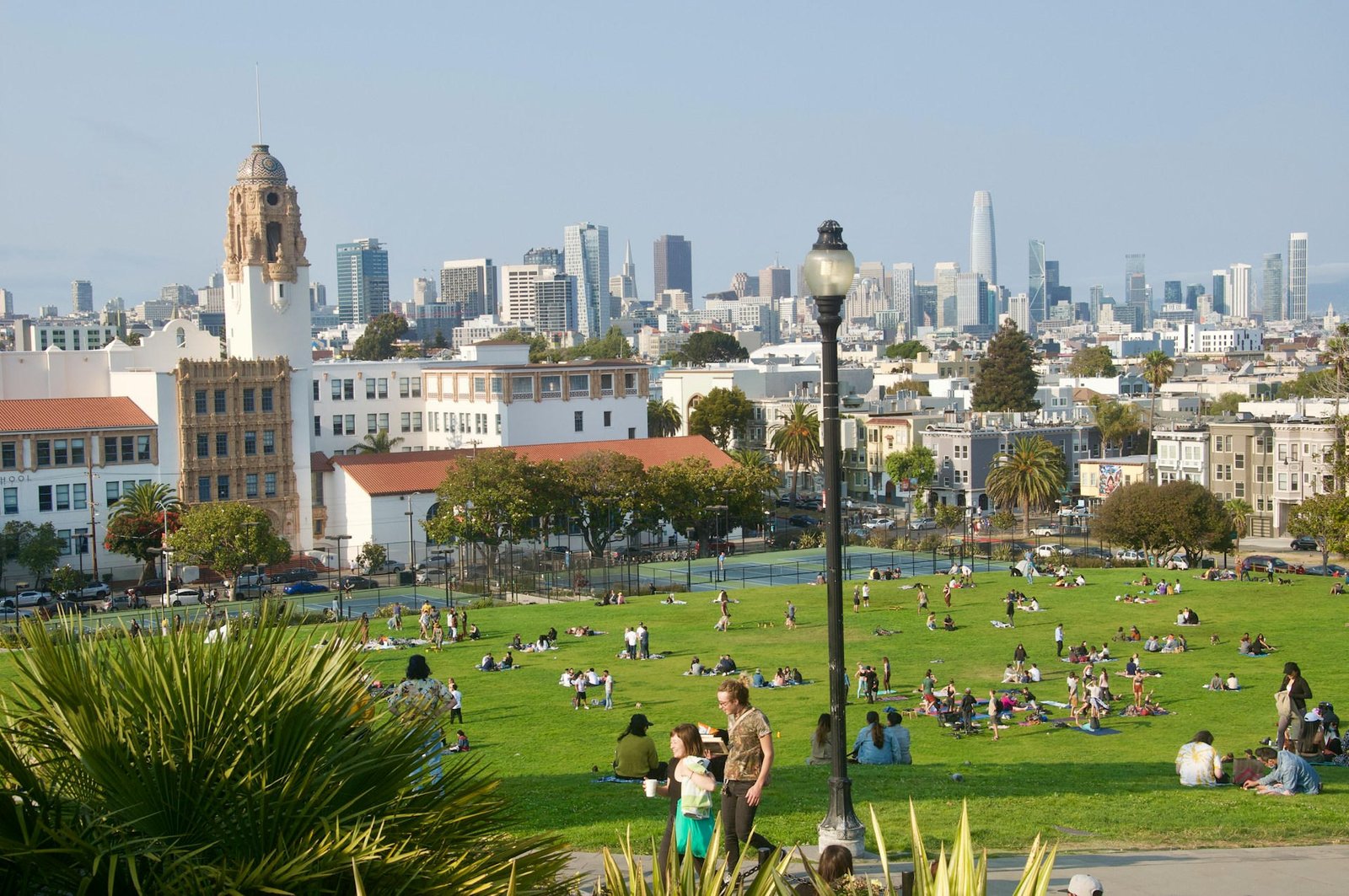
San Francisco is compact and very walkable. Compact geography and dense urban planning place major attractions within easy walking distance of each other.
Central San Francisco is usually easier on trams, buses, and cable cars than behind the wheel. Most classic sights between Union Square, the Ferry Building, and Fisherman’s Wharf sit on Muni tram, bus, or cable car routes. A visitor pass keeps tapping simple. Travelers never need to tackle steep one-way streets or the tight junctions that feed the Bay Bridge. Entire neighborhoods connect on foot. The Embarcadero stretches flat and scenic along the waterfront.
How do San Francisco’s neighborhoods connect for pedestrians?
Neighborhoods flow into one another without major barriers. The grid pattern in districts like the Mission and Nob Hill creates direct routes. Free SF Tour guides walk downtown every morning, showing guests how accessible the city is on foot. These daily excursions demonstrate that visitors can cover significant ground without ever boarding a vehicle.
What makes public transit support a walkable trip?
Transit fills the gaps between longer walks. Cable cars climb hills that would exhaust even fit pedestrians. Buses and trams run frequently through corridors where walking distances stretch beyond comfort. The system eliminates the need for a rental car entirely. Visitors exploring San Francisco without a car discover that combining walking with occasional transit rides unlocks every neighborhood efficiently. The best walking routes in San Francisco often start where transit drops travelers at the edge of a district, letting them explore on foot from there.
How do you explore San Francisco without a car?
Visitors do not need a car to explore San Francisco. The city’s compact layout and dense transit network make walking, biking, and public transportation practical alternatives for every major neighborhood.
Free SF Tour operates a daily 10 AM walking tour from Union Square, rain or shine. There is no ticket; at the end, guests pay the guide what they think the tour was worth.
Which free tours can you join without a car?
The Official Tour of San Francisco leaves daily at 10:00 AM in English and 10:30 AM in Spanish from the corner of Post and Powell streets, on the north-west side of Union Square; the guide holds a white-and-red umbrella that says FREE TOUR. It lasts about 2.5 hours, covers 1.8 miles (3 km), is nearly flat, and goes from Union Square through Maiden Lane and Chinatown (Dragon Gate, Golden Gate Fortune Cookie Factory, Ross Alley, Portsmouth Square) past the Transamerica Pyramid to the Embarcadero opposite the Ferry Building.
The Night Tour “From Asia to Europe: Chinatown and Little Italy” leaves daily at 6:00 PM from the Dragon Gate (Grant Avenue and Bush Street), 2 hours, 1.2 miles.
The Free E-Bike Tour leaves at 3:00 PM from Fox Plaza, lasts about 4 hours, covers 15 miles and 18 landmarks including the Golden Gate Bridge, maximum 4 riders, no rental fee. Arrive 10 to 15 minutes early and reserve a free spot at freesftour.com. There is no ticket; at the end, guests pay the guide what they think the tour was worth.
How do cable cars and buses fit into a car-free trip?
Cable cars deliver the postcard hills that define San Francisco’s iconic skyline. Frequent buses and light rail handle everyday hops between hotels, museums, parks, and piers. Together, the two systems cover nearly every sight a visitor wants to reach.
For travelers comparing San Francisco city tours, walking routes pair well with transit passes. A visitor can walk one neighborhood in the morning, ride a cable car midday, and join an afternoon tour without ever touching a steering wheel.
Free SF Tour also runs the Free E-Bike Tour, departing at 3:00 PM from Fox Plaza: about 4 hours, 15 miles and 18 landmarks including the Golden Gate Bridge, a maximum of 4 riders, and no rental fee.
What about San Francisco car break ins?
Car break-ins are the one driving problem visitors ask us about most, and the easiest to avoid. Parking costs, traffic, and steep hills already make driving more trouble than it is worth for tourists.
How can visitors protect a parked car?
Free SF Tour guides emphasize one non-negotiable rule. Leave nothing visible inside the vehicle. This includes bags, jackets, charging cables, and loose change. Even an empty shopping bag signals potential reward to a thief. Trunks offer limited protection.
Park in your hotel garage or a staffed, secured garage rather than on the street, especially overnight. If you only need the car for a day trip, return it early and spend the rest of your stay on foot, on Muni, or on the Free E-Bike Tour — Golden Gate Park and the Marina are easy to reach without driving.
Does avoiding a car rental save money?
Foregoing a car makes it easier to stick to a budget when visiting San Francisco. Rental fees, daily garage charges, and fuel add up quickly. A single broken window costs hundreds of dollars in repairs and lost belongings. The financial drain compounds fast. Walking tours, public transit, and rideshare services eliminate these risks entirely. Travelers exploring San Francisco without a car avoid the city’s most notorious visitor headache while keeping their trip affordable and stress-free.
When should you rent a car anyway?
A rental car makes sense for three specific San Francisco travel scenarios. Airport arrivals with heavy luggage, day trips beyond the city limits, and travelers who need to move large amounts of gear all benefit from having a vehicle. A rental is most useful for airport arrivals, day trips beyond the city, and travelers with lots of luggage. Without a car, visitors lose access to some of Northern California’s most dramatic landscapes.
What destinations require a car from San Francisco?
Marin, Sonoma, and Tahoe sit just beyond the reach of public transit. These monumental vistas are an easy drive from San Francisco but nearly impossible without a motor. A traveler who skips the rental misses wine country, alpine lakes, and coastal headlands that define the region’s character.
How long should visitors rent a car?
The smartest plan for most visitors combines public transport in town with a short hire for side trips. A visitor uses Muni, cable cars, and walking for downtown exploration, then picks up a rental for one or two days of regional travel. This strategy avoids parking costs and break-in risks while still unlocking destinations beyond the city.
For a broader look at planning an efficient visit, the ultimate activity guide covers iconic sights and walking routes that work perfectly without a car.
FAQ
Do most visitors to San Francisco need a car?
Most visitors do not need a car. Muni trams, buses, and cable cars connect Union Square, Fisherman’s Wharf, and the Ferry Building.
Conclusion
The answer is clear: skip the rental car and let the city’s streets, transit, and guided walks carry the trip. A car-free visit keeps the focus on the experience, not the parking spot or the risk of a broken window. For most itineraries, walking and public transit deliver the city’s best moments. Reserve a vehicle only for the day you head to wine country or the coast, and leave the driving in town to the cable cars.